CWE-613
Allowed-with-ReviewInsufficient Session Expiration
Abstraction: Base · Status: Incomplete
According to WASC, "Insufficient Session Expiration is when a web site permits an attacker to reuse old session credentials or session IDs for authorization."
1018 vulnerabilities reference this CWE, most recent first.
GHSA-F95C-WF66-HQ9M
Vulnerability from github – Published: 2026-09-18 12:31 – Updated: 2026-09-18 12:31A stored Cross-Site Scripting (XSS) vulnerability in the profile management functionality of T-Systems’ TAO 2.0 suite. An authenticated user could inject malicious HTML or JavaScript content into the fields containing their personal data. The content entered is stored and displayed without being properly sanitised when another user, including administrative staff, views the affected profile. Successful exploitation could allow JavaScript code to be executed in the victim’s browser, access to information available within the session, or the performance of actions using the victim’s permissions.
{
  "affected": [],
  "aliases": [
    "CVE-2026-92976"
  ],
  "database_specific": {
    "cwe_ids": [
      "CWE-613"
    ],
    "github_reviewed": false,
    "github_reviewed_at": null,
    "nvd_published_at": "2026-09-18T10:17:08Z",
    "severity": "MODERATE"
  },
  "details": "A stored Cross-Site Scripting (XSS) vulnerability in the profile management functionality of T-Systems\u2019 TAO 2.0 suite. An authenticated user could inject malicious HTML or JavaScript content into the fields containing their personal data. The content entered is stored and displayed without being properly sanitised when another user, including administrative staff, views the affected profile. Successful exploitation could allow JavaScript code to be executed in the victim\u2019s browser, access to information available within the session, or the performance of actions using the victim\u2019s permissions.",
  "id": "GHSA-f95c-wf66-hq9m",
  "modified": "2026-09-18T12:31:19Z",
  "published": "2026-09-18T12:31:19Z",
  "references": [
    {
      "type": "ADVISORY",
      "url": "https://nvd.nist.gov/vuln/detail/CVE-2026-92976"
    },
    {
      "type": "WEB",
      "url": "https://www.incibe.es/en/incibe-cert/notices/aviso/stored-cross-site-scripting-xss-t-systems-tao-20"
    }
  ],
  "schema_version": "1.4.0",
  "severity": [
    {
      "score": "CVSS:4.0/AV:N/AC:L/AT:N/PR:L/UI:P/VC:N/VI:N/VA:N/SC:L/SI:L/SA:N/E:X/CR:X/IR:X/AR:X/MAV:X/MAC:X/MAT:X/MPR:X/MUI:X/MVC:X/MVI:X/MVA:X/MSC:X/MSI:X/MSA:X/S:X/AU:X/R:X/V:X/RE:X/U:X",
      "type": "CVSS_V4"
    }
  ]
}
GHSA-F9FF-5X35-7GFW
Vulnerability from github – Published: 2026-07-02 19:35 – Updated: 2026-07-02 19:35Summary
Authorization for scoped (agent) MCP callers is enforced inline, per tool, and is applied inconsistently — several mutating tools silently omit the ancestry/workspace check that their siblings perform. Because the MCP server authenticates all outbound gRPC with the full server API key and the backend gRPC handlers perform no caller-based authorization, the MCP tool layer is the sole authorization boundary. A malicious or prompt-injected scoped agent can therefore perform cross-task and cross-session operations it should not be allowed to (an IDOR / privilege-boundary bypass).
This advisory bundles the audit's Systemic Pattern A findings: F2, F6, F7, F12 (and the duplicate F19).
Affected versions
@grackle-ai/mcp (with @grackle-ai/plugin-core / @grackle-ai/auth) at 0.132.1 and earlier.
Root cause
mcp-server.ts:111-127(createGrpcClients) setsAuthorization: Bearer ${apiKey}(the full server key) on every outbound gRPC call.- Backend handlers (
updateTask,deleteTask,resumeTask,killAgent,getTaskinplugin-core) take only the request message — noAuthContext— and act on whatever ID is passed. - Therefore scope must be enforced in each MCP tool handler. Some call
assertCallerIsAncestor(task_complete,task_start,session_attach,session_send_input); their destructive siblings do not. New tools that forget the check fail open.
F2 — task_update / task_delete / task_resume bypass ancestry (High)
Location: packages/mcp/src/tools/task.ts:226 (task_update), :393 (task_delete), :465 (task_resume).
These accept an arbitrary taskId with only a ROOT_TASK_ID special-case and no assertCallerIsAncestor. The central dispatcher hardcodes its workspace gate to name === "task_show", and these tools' Zod schemas have no workspaceId field (so the blanket injection is stripped). They are not in DEFAULT_SCOPED_MCP_TOOLS but are in the shipped ORCHESTRATOR_MCP_TOOLS / ADMIN_MCP_TOOLS presets.
Exploit: a scoped agent under the orchestrator persona learns a sibling/parent/cross-workspace task ID (via task_list/task_search), then task_delete {taskId: <victim>} (permanently destroys another agent's or the human parent's work) or task_update to flip a sibling to complete/failed or rewrite its dependency DAG and budgets.
F6 — session_kill / session_resume bypass ancestry (Medium)
Location: packages/mcp/src/tools/session.ts:95 (session_resume), :178 (session_kill).
Call client.killAgent / client.resumeAgent directly with no auth context, unlike session_attach/session_send_input. session_kill is in the orchestrator preset. Exploit: cross-session SIGKILL DoS against a sibling agent or the root orchestrator; foreign session resume.
F7 — Workspaceless scoped token fails open to all workspaces (Medium)
Location: packages/mcp/src/mcp-server.ts:565-600.
The per-task cross-workspace check (task_show block) is gated on authContext.workspaceId being truthy. A task created without a workspace (a supported config) mints a scoped token with pid: "" → workspaceId: undefined, so the check is skipped and the injected workspaceId becomes "", which the backend treats as "all workspaces." Exploit: a malicious agent in a workspaceless session calls task_list (no args) → reads every task in every workspace, then task_show {taskId} cross-workspace (title/description/branch/review-notes). schedule_show (in the default scoped allowlist) resolves by ID with no workspace check. Read-only cross-workspace disclosure.
F12 — Scoped-token revocation is dead code (Low)
Location: packages/auth/src/scoped-token.ts:23,142-149.
The consuming check is wired (auth-middleware.ts:90-92), but revokeTask() is never called outside tests — no task-abort/stop flow invokes it — and the backing revokedTasks Map is in-memory only (lost on restart). A compromised agent that exfiltrated its scoped token keeps authenticating for the full 24h TTL regardless of task lifecycle.
Remediation
- Systemic fix: enforce scope centrally in the
CallToolRequestdispatcher (mcp-server.ts) via a per-tooltargetTaskIdArg/targetSessionIdArgdescriptor so any tool that targets a task/session fails closed unless the caller is an ancestor (or self). - Immediately, add
assertCallerIsAncestor(or self-or-ancestor) totask_update,task_delete,task_resume,session_kill,session_resume, mirroringtask_complete/task_start. - F7: do not fail open on empty
workspaceId— treat a scoped non-root caller with no workspace as having access to no workspace; apply thetask_showmembership check whenever the caller is scoped and notROOT_TASK_ID; add a per-id membership check toschedule_show. - F12: wire
revokeTask()into task-abort/stop flows with SQLite-backed persistence (like channel-grant revocation), or remove the dead API and document the 24h window. - Add regression tests mirroring the existing
task_completeancestor tests for each mutator.
CWEs
CWE-862 (Missing Authorization), CWE-639 (Authorization Bypass Through User-Controlled Key / IDOR), CWE-613 (Insufficient Session Expiration).
{
  "affected": [
    {
      "package": {
        "ecosystem": "npm",
        "name": "@grackle-ai/mcp"
      },
      "ranges": [
        {
          "events": [
            {
              "introduced": "0"
            },
            {
              "last_affected": "0.132.1"
            }
          ],
          "type": "ECOSYSTEM"
        }
      ]
    },
    {
      "package": {
        "ecosystem": "npm",
        "name": "@grackle-ai/plugin-core"
      },
      "ranges": [
        {
          "events": [
            {
              "introduced": "0"
            },
            {
              "last_affected": "0.132.1"
            }
          ],
          "type": "ECOSYSTEM"
        }
      ]
    },
    {
      "package": {
        "ecosystem": "npm",
        "name": "@grackle-ai/auth"
      },
      "ranges": [
        {
          "events": [
            {
              "introduced": "0"
            },
            {
              "last_affected": "0.132.1"
            }
          ],
          "type": "ECOSYSTEM"
        }
      ]
    }
  ],
  "aliases": [],
  "database_specific": {
    "cwe_ids": [
      "CWE-613",
      "CWE-639",
      "CWE-862"
    ],
    "github_reviewed": true,
    "github_reviewed_at": "2026-07-02T19:35:03Z",
    "nvd_published_at": null,
    "severity": "HIGH"
  },
  "details": "## Summary\n\nAuthorization for scoped (agent) MCP callers is enforced **inline, per tool**, and is applied inconsistently \u2014 several mutating tools silently omit the ancestry/workspace check that their siblings perform. Because the MCP server authenticates all outbound gRPC with the full server API key and the backend gRPC handlers perform **no caller-based authorization**, the MCP tool layer is the *sole* authorization boundary. A malicious or prompt-injected scoped agent can therefore perform cross-task and cross-session operations it should not be allowed to (an IDOR / privilege-boundary bypass).\n\nThis advisory bundles the audit\u0027s **Systemic Pattern A** findings: **F2, F6, F7, F12** (and the duplicate F19).\n\n## Affected versions\n\n`@grackle-ai/mcp` (with `@grackle-ai/plugin-core` / `@grackle-ai/auth`) at **0.132.1** and earlier.\n\n## Root cause\n\n- `mcp-server.ts:111-127` (`createGrpcClients`) sets `Authorization: Bearer ${apiKey}` (the full server key) on every outbound gRPC call.\n- Backend handlers (`updateTask`, `deleteTask`, `resumeTask`, `killAgent`, `getTask` in `plugin-core`) take only the request message \u2014 no `AuthContext` \u2014 and act on whatever ID is passed.\n- Therefore scope must be enforced in each MCP tool handler. Some call `assertCallerIsAncestor` (`task_complete`, `task_start`, `session_attach`, `session_send_input`); their destructive siblings do not. New tools that forget the check **fail open**.\n\n## F2 \u2014 task_update / task_delete / task_resume bypass ancestry (High)\n\n**Location:** `packages/mcp/src/tools/task.ts:226` (task_update), `:393` (task_delete), `:465` (task_resume).\n\nThese accept an arbitrary `taskId` with only a `ROOT_TASK_ID` special-case and no `assertCallerIsAncestor`. The central dispatcher hardcodes its workspace gate to `name === \"task_show\"`, and these tools\u0027 Zod schemas have no `workspaceId` field (so the blanket injection is stripped). They are not in `DEFAULT_SCOPED_MCP_TOOLS` but **are** in the shipped `ORCHESTRATOR_MCP_TOOLS` / `ADMIN_MCP_TOOLS` presets.\n\n**Exploit:** a scoped agent under the orchestrator persona learns a sibling/parent/cross-workspace task ID (via `task_list`/`task_search`), then `task_delete {taskId: \u003cvictim\u003e}` (permanently destroys another agent\u0027s or the human parent\u0027s work) or `task_update` to flip a sibling to `complete`/`failed` or rewrite its dependency DAG and budgets.\n\n## F6 \u2014 session_kill / session_resume bypass ancestry (Medium)\n\n**Location:** `packages/mcp/src/tools/session.ts:95` (session_resume), `:178` (session_kill).\n\nCall `client.killAgent` / `client.resumeAgent` directly with no auth context, unlike `session_attach`/`session_send_input`. `session_kill` is in the orchestrator preset. **Exploit:** cross-session SIGKILL DoS against a sibling agent or the root orchestrator; foreign session resume.\n\n## F7 \u2014 Workspaceless scoped token fails open to all workspaces (Medium)\n\n**Location:** `packages/mcp/src/mcp-server.ts:565-600`.\n\nThe per-task cross-workspace check (`task_show` block) is gated on `authContext.workspaceId` being truthy. A task created without a workspace (a supported config) mints a scoped token with `pid: \"\"` \u2192 `workspaceId: undefined`, so the check is skipped and the injected `workspaceId` becomes `\"\"`, which the backend treats as \"all workspaces.\" **Exploit:** a malicious agent in a workspaceless session calls `task_list` (no args) \u2192 reads every task in every workspace, then `task_show {taskId}` cross-workspace (title/description/branch/review-notes). `schedule_show` (in the default scoped allowlist) resolves by ID with no workspace check. Read-only cross-workspace disclosure.\n\n## F12 \u2014 Scoped-token revocation is dead code (Low)\n\n**Location:** `packages/auth/src/scoped-token.ts:23,142-149`.\n\nThe consuming check is wired (`auth-middleware.ts:90-92`), but `revokeTask()` is **never called outside tests** \u2014 no task-abort/stop flow invokes it \u2014 and the backing `revokedTasks` Map is in-memory only (lost on restart). A compromised agent that exfiltrated its scoped token keeps authenticating for the full 24h TTL regardless of task lifecycle.\n\n## Remediation\n\n- **Systemic fix:** enforce scope **centrally** in the `CallToolRequest` dispatcher (`mcp-server.ts`) via a per-tool `targetTaskIdArg` / `targetSessionIdArg` descriptor so any tool that targets a task/session **fails closed** unless the caller is an ancestor (or self).\n- Immediately, add `assertCallerIsAncestor` (or self-or-ancestor) to `task_update`, `task_delete`, `task_resume`, `session_kill`, `session_resume`, mirroring `task_complete`/`task_start`.\n- F7: do **not** fail open on empty `workspaceId` \u2014 treat a scoped non-root caller with no workspace as having access to *no* workspace; apply the `task_show` membership check whenever the caller is scoped and not `ROOT_TASK_ID`; add a per-id membership check to `schedule_show`.\n- F12: wire `revokeTask()` into task-abort/stop flows with SQLite-backed persistence (like channel-grant revocation), or remove the dead API and document the 24h window.\n- Add regression tests mirroring the existing `task_complete` ancestor tests for each mutator.\n\n## CWEs\n\nCWE-862 (Missing Authorization), CWE-639 (Authorization Bypass Through User-Controlled Key / IDOR), CWE-613 (Insufficient Session Expiration).",
  "id": "GHSA-f9ff-5x35-7gfw",
  "modified": "2026-07-02T19:35:03Z",
  "published": "2026-07-02T19:35:03Z",
  "references": [
    {
      "type": "WEB",
      "url": "https://github.com/nick-pape/grackle/security/advisories/GHSA-f9ff-5x35-7gfw"
    },
    {
      "type": "PACKAGE",
      "url": "https://github.com/nick-pape/grackle"
    }
  ],
  "schema_version": "1.4.0",
  "severity": [
    {
      "score": "CVSS:4.0/AV:N/AC:L/AT:N/PR:L/UI:N/VC:H/VI:H/VA:H/SC:N/SI:N/SA:N",
      "type": "CVSS_V4"
    }
  ],
  "summary": "Grackle: Fail-open authorization in the MCP tool layer lets scoped agents perform cross-task and cross-session mutations (IDOR)"
}
GHSA-F9XM-74VQ-4X7M
Vulnerability from github – Published: 2025-07-28 21:31 – Updated: 2025-07-28 21:31Improper session invalidation in the component /crm/change-password.php of PHPGurukul Online Course Registration v3.1 allows attackers to execute a session hijacking attack.
{
  "affected": [],
  "aliases": [
    "CVE-2025-50485"
  ],
  "database_specific": {
    "cwe_ids": [
      "CWE-613"
    ],
    "github_reviewed": false,
    "github_reviewed_at": null,
    "nvd_published_at": "2025-07-28T20:17:47Z",
    "severity": "HIGH"
  },
  "details": "Improper session invalidation in the component /crm/change-password.php of PHPGurukul Online Course Registration v3.1 allows attackers to execute a session hijacking attack.",
  "id": "GHSA-f9xm-74vq-4x7m",
  "modified": "2025-07-28T21:31:35Z",
  "published": "2025-07-28T21:31:35Z",
  "references": [
    {
      "type": "ADVISORY",
      "url": "https://nvd.nist.gov/vuln/detail/CVE-2025-50485"
    },
    {
      "type": "WEB",
      "url": "https://github.com/VasilVK/CVE/tree/main/CVE-2025-50485"
    },
    {
      "type": "WEB",
      "url": "http://online.com"
    },
    {
      "type": "WEB",
      "url": "http://phpgurukul.com"
    }
  ],
  "schema_version": "1.4.0",
  "severity": [
    {
      "score": "CVSS:3.1/AV:N/AC:L/PR:N/UI:R/S:U/C:H/I:L/A:N",
      "type": "CVSS_V3"
    }
  ]
}
GHSA-FCC5-X3G2-XC22
Vulnerability from github – Published: 2022-05-24 17:28 – Updated: 2022-10-01 00:00A vulnerability was discovered in GitLab versions before 13.1.10, 13.2.8 and 13.3.4. The revocation feature was not revoking all session tokens and one could re-use it to obtain a valid session.
{
  "affected": [],
  "aliases": [
    "CVE-2020-13299"
  ],
  "database_specific": {
    "cwe_ids": [
      "CWE-613"
    ],
    "github_reviewed": false,
    "github_reviewed_at": null,
    "nvd_published_at": "2020-09-14T19:15:00Z",
    "severity": "MODERATE"
  },
  "details": "A vulnerability was discovered in GitLab versions before 13.1.10, 13.2.8 and 13.3.4. The revocation feature was not revoking all session tokens and one could re-use it to obtain a valid session.",
  "id": "GHSA-fcc5-x3g2-xc22",
  "modified": "2022-10-01T00:00:20Z",
  "published": "2022-05-24T17:28:14Z",
  "references": [
    {
      "type": "ADVISORY",
      "url": "https://nvd.nist.gov/vuln/detail/CVE-2020-13299"
    },
    {
      "type": "WEB",
      "url": "https://hackerone.com/reports/896225"
    },
    {
      "type": "WEB",
      "url": "https://gitlab.com/gitlab-org/cves/-/blob/master/2020/CVE-2020-13299.json"
    },
    {
      "type": "WEB",
      "url": "https://gitlab.com/gitlab-org/gitlab/-/issues/222508"
    }
  ],
  "schema_version": "1.4.0",
  "severity": [
    {
      "score": "CVSS:3.1/AV:N/AC:L/PR:L/UI:N/S:U/C:H/I:H/A:N",
      "type": "CVSS_V3"
    }
  ]
}
GHSA-FFV4-58CG-F6V5
Vulnerability from github – Published: 2022-05-24 16:45 – Updated: 2022-12-09 21:30IBM Tivoli Storage Productivity Center (IBM Spectrum Control Standard Edition 5.2.1 through 5.2.17) allows users to remain idle within the application even when a user has logged out. Utilizing the application back button users can remain logged in as the current user for a short period of time, therefore users are presented with information for Spectrum Control Application. IBM X-Force ID: 157064.
{
  "affected": [],
  "aliases": [
    "CVE-2019-4072"
  ],
  "database_specific": {
    "cwe_ids": [
      "CWE-613"
    ],
    "github_reviewed": false,
    "github_reviewed_at": null,
    "nvd_published_at": "2019-05-09T15:29:00Z",
    "severity": "MODERATE"
  },
  "details": "IBM Tivoli Storage Productivity Center (IBM Spectrum Control Standard Edition 5.2.1 through 5.2.17) allows users to remain idle within the application even when a user has logged out. Utilizing the application back button users can remain logged in as the current user for a short period of time, therefore users are presented with information for Spectrum Control Application. IBM X-Force ID: 157064.",
  "id": "GHSA-ffv4-58cg-f6v5",
  "modified": "2022-12-09T21:30:53Z",
  "published": "2022-05-24T16:45:25Z",
  "references": [
    {
      "type": "ADVISORY",
      "url": "https://nvd.nist.gov/vuln/detail/CVE-2019-4072"
    },
    {
      "type": "WEB",
      "url": "https://exchange.xforce.ibmcloud.com/vulnerabilities/157064"
    },
    {
      "type": "WEB",
      "url": "http://www.ibm.com/support/docview.wss?uid=ibm10873036"
    }
  ],
  "schema_version": "1.4.0",
  "severity": [
    {
      "score": "CVSS:3.1/AV:N/AC:L/PR:L/UI:N/S:U/C:L/I:L/A:L",
      "type": "CVSS_V3"
    }
  ]
}
GHSA-FGQM-87V3-4QJ6
Vulnerability from github – Published: 2024-07-09 18:30 – Updated: 2024-07-09 18:30Multiple insufficient session expiration vulnerabilities [CWE-613] in FortiAIOps version 2.0.0 may allow an attacker to re-use stolen old session tokens to perform unauthorized operations via crafted requests.
{
  "affected": [],
  "aliases": [
    "CVE-2024-27782"
  ],
  "database_specific": {
    "cwe_ids": [
      "CWE-613"
    ],
    "github_reviewed": false,
    "github_reviewed_at": null,
    "nvd_published_at": "2024-07-09T16:15:05Z",
    "severity": "HIGH"
  },
  "details": "Multiple insufficient session expiration vulnerabilities [CWE-613]  in FortiAIOps version 2.0.0 may allow an attacker to re-use stolen old session tokens to perform unauthorized operations via crafted requests.",
  "id": "GHSA-fgqm-87v3-4qj6",
  "modified": "2024-07-09T18:30:48Z",
  "published": "2024-07-09T18:30:48Z",
  "references": [
    {
      "type": "ADVISORY",
      "url": "https://nvd.nist.gov/vuln/detail/CVE-2024-27782"
    },
    {
      "type": "WEB",
      "url": "https://fortiguard.fortinet.com/psirt/FG-IR-24-069"
    }
  ],
  "schema_version": "1.4.0",
  "severity": [
    {
      "score": "CVSS:3.1/AV:N/AC:H/PR:N/UI:N/S:U/C:H/I:H/A:H",
      "type": "CVSS_V3"
    }
  ]
}
GHSA-FH84-5Q42-44P3
Vulnerability from github – Published: 2026-02-05 00:31 – Updated: 2026-02-05 00:31IBM Concert 1.0.0 through 2.1.0 does not invalidate session after logout which could allow an authenticated user to impersonate another user on the system.
{
  "affected": [],
  "aliases": [
    "CVE-2024-43181"
  ],
  "database_specific": {
    "cwe_ids": [
      "CWE-613"
    ],
    "github_reviewed": false,
    "github_reviewed_at": null,
    "nvd_published_at": "2026-02-04T22:15:56Z",
    "severity": "MODERATE"
  },
  "details": "IBM Concert 1.0.0 through 2.1.0 does not invalidate session after logout which could allow an authenticated user to impersonate another user on the system.",
  "id": "GHSA-fh84-5q42-44p3",
  "modified": "2026-02-05T00:31:00Z",
  "published": "2026-02-05T00:31:00Z",
  "references": [
    {
      "type": "ADVISORY",
      "url": "https://nvd.nist.gov/vuln/detail/CVE-2024-43181"
    },
    {
      "type": "WEB",
      "url": "https://www.ibm.com/support/pages/node/7257006"
    }
  ],
  "schema_version": "1.4.0",
  "severity": [
    {
      "score": "CVSS:3.1/AV:N/AC:L/PR:L/UI:N/S:U/C:L/I:L/A:L",
      "type": "CVSS_V3"
    }
  ]
}
GHSA-FHHF-PQCG-P3JC
Vulnerability from github – Published: 2026-08-04 12:34 – Updated: 2026-08-04 12:34Insufficient session expiration vulnerability in Bilin Software and Informatics Consultancy Inc. HUMANIST Digital Human Resources allows Reusing Session IDs (aka Session Replay).
This issue affects HUMANIST Digital Human Resources: from 26.0 before 26.1.
{
  "affected": [],
  "aliases": [
    "CVE-2026-14465"
  ],
  "database_specific": {
    "cwe_ids": [
      "CWE-613"
    ],
    "github_reviewed": false,
    "github_reviewed_at": null,
    "nvd_published_at": "2026-08-04T10:19:32Z",
    "severity": "MODERATE"
  },
  "details": "Insufficient session expiration vulnerability in Bilin Software and Informatics Consultancy Inc. HUMANIST Digital Human Resources allows Reusing Session IDs (aka Session Replay).\n\nThis issue affects HUMANIST Digital Human Resources: from 26.0 before 26.1.",
  "id": "GHSA-fhhf-pqcg-p3jc",
  "modified": "2026-08-04T12:34:50Z",
  "published": "2026-08-04T12:34:50Z",
  "references": [
    {
      "type": "ADVISORY",
      "url": "https://nvd.nist.gov/vuln/detail/CVE-2026-14465"
    },
    {
      "type": "WEB",
      "url": "https://siberguvenlik.gov.tr/guvenlik-bildirimleri/detay/tr-26-0737"
    }
  ],
  "schema_version": "1.4.0",
  "severity": [
    {
      "score": "CVSS:3.1/AV:N/AC:L/PR:N/UI:R/S:U/C:H/I:N/A:N",
      "type": "CVSS_V3"
    }
  ]
}
GHSA-FJ52-5G4H-GMQ8
Vulnerability from github – Published: 2026-04-14 23:39 – Updated: 2026-04-14 23:39Summary
The pyload application does not properly invalidate or modify sessions upon changes made to a user's permissions.
Details
Whenever an administrator changes the permissions a specific account has, they do not expect that account still being able to access data that their new permissions do not allow. This is not the case for the pyload application, as a user with a valid session can still perform the actions.
PoC
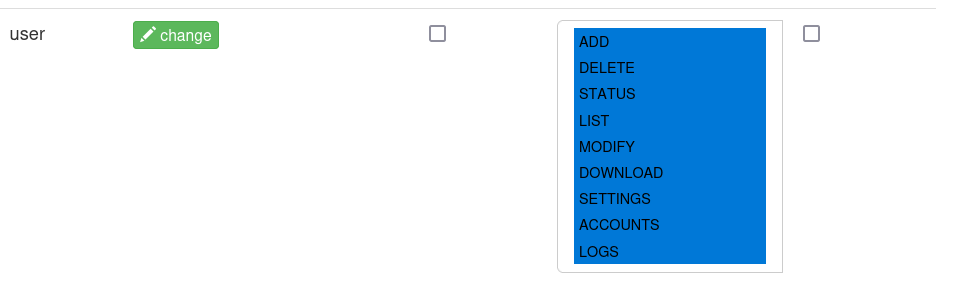
Take a user with all the permissions, as shown below.
We now log in as this user.

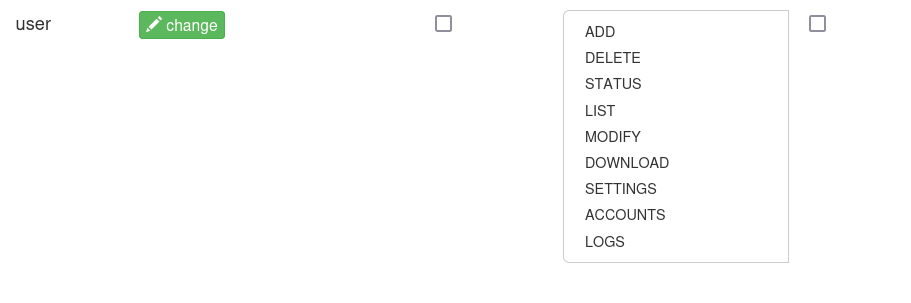
Let us now take away all the permissions.
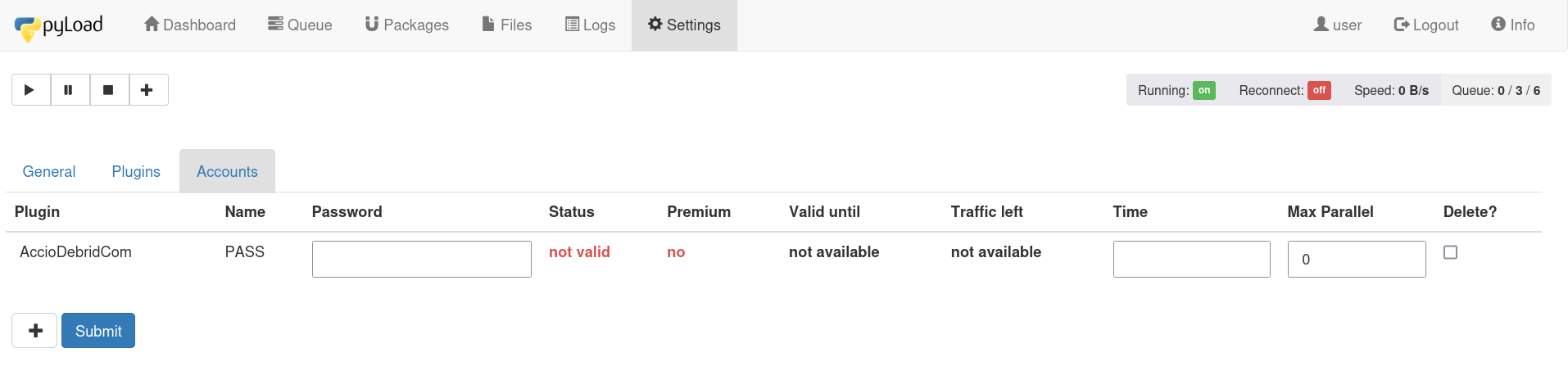
The logged in session can still be used to access everything in the application.
Impact
Should permissions be taken away, then the user is expected not to be able to execute the actions belonging to those actions anymore.
{
"affected": [
{
"package": {
"ecosystem": "PyPI",
"name": "pyload-ng"
},
"ranges": [
{
"events": [
{
"introduced": "0"
},
{
"last_affected": "0.5.0b3.dev97"
}
],
"type": "ECOSYSTEM"
}
]
}
],
"aliases": [],
"database_specific": {
"cwe_ids": [
"CWE-613"
],
"github_reviewed": true,
"github_reviewed_at": "2026-04-14T23:39:25Z",
"nvd_published_at": null,
"severity": "LOW"
},
"details": "### Summary\nThe `pyload` application does not properly invalidate or modify sessions upon changes made to a user\u0027s permissions.\n\n### Details\nWhenever an administrator changes the permissions a specific account has, they do not expect that account still being able to access data that their new permissions do not allow. This is not the case for the `pyload` application, as a user with a valid session can still perform the actions.\n\n### PoC\nTake a user with all the permissions, as shown below.\n\n\nWe now log in as this user.\n\n\nLet us now take away all the permissions.\n\n\nThe logged in session can still be used to access everything in the application.\n\n\n### Impact\nShould permissions be taken away, then the user is expected not to be able to execute the actions belonging to those actions anymore.",
"id": "GHSA-fj52-5g4h-gmq8",
"modified": "2026-04-14T23:39:25Z",
"published": "2026-04-14T23:39:25Z",
"references": [
{
"type": "WEB",
"url": "https://github.com/pyload/pyload/security/advisories/GHSA-fj52-5g4h-gmq8"
},
{
"type": "WEB",
"url": "https://github.com/pyload/pyload/commit/e95804fb0d06cbb07d2ba380fc494d9ff89b68c1"
},
{
"type": "PACKAGE",
"url": "https://github.com/pyload/pyload"
}
],
"schema_version": "1.4.0",
"severity": [
{
"score": "CVSS:4.0/AV:N/AC:H/AT:N/PR:N/UI:N/VC:L/VI:L/VA:N/SC:N/SI:N/SA:N/E:P",
"type": "CVSS_V4"
}
],
"summary": "pyLoad\u0027s Session Not Invalidated After Permission Changes"
}
GHSA-FJFH-84XH-5HV3
Vulnerability from github – Published: 2022-08-02 00:00 – Updated: 2022-08-09 00:00NLnet Labs Unbound, up to and including version 1.16.1, is vulnerable to a novel type of the "ghost domain names" attack. The vulnerability works by targeting an Unbound instance. Unbound is queried for a rogue domain name when the cached delegation information is about to expire. The rogue nameserver delays the response so that the cached delegation information is expired. Upon receiving the delayed answer containing the delegation information, Unbound overwrites the now expired entries. This action can be repeated when the delegation information is about to expire making the rogue delegation information ever-updating. From version 1.16.2 on, Unbound stores the start time for a query and uses that to decide if the cached delegation information can be overwritten.
{
  "affected": [],
  "aliases": [
    "CVE-2022-30699"
  ],
  "database_specific": {
    "cwe_ids": [
      "CWE-613"
    ],
    "github_reviewed": false,
    "github_reviewed_at": null,
    "nvd_published_at": "2022-08-01T15:15:00Z",
    "severity": "MODERATE"
  },
  "details": "NLnet Labs Unbound, up to and including version 1.16.1, is vulnerable to a novel type of the \"ghost domain names\" attack. The vulnerability works by targeting an Unbound instance. Unbound is queried for a rogue domain name when the cached delegation information is about to expire. The rogue nameserver delays the response so that the cached delegation information is expired. Upon receiving the delayed answer containing the delegation information, Unbound overwrites the now expired entries. This action can be repeated when the delegation information is about to expire making the rogue delegation information ever-updating. From version 1.16.2 on, Unbound stores the start time for a query and uses that to decide if the cached delegation information can be overwritten.",
  "id": "GHSA-fjfh-84xh-5hv3",
  "modified": "2022-08-09T00:00:27Z",
  "published": "2022-08-02T00:00:25Z",
  "references": [
    {
      "type": "ADVISORY",
      "url": "https://nvd.nist.gov/vuln/detail/CVE-2022-30699"
    },
    {
      "type": "WEB",
      "url": "https://lists.debian.org/debian-lts-announce/2023/03/msg00024.html"
    },
    {
      "type": "WEB",
      "url": "https://lists.fedoraproject.org/archives/list/package-announce@lists.fedoraproject.org/message/5L3ZFWZZFPBIL654BG75RWXUMPFQJ5EC"
    },
    {
      "type": "WEB",
      "url": "https://lists.fedoraproject.org/archives/list/package-announce@lists.fedoraproject.org/message/D35CX4SCZVNKZTWJXPDFTHWZHINMGEZD"
    },
    {
      "type": "WEB",
      "url": "https://security.gentoo.org/glsa/202212-02"
    },
    {
      "type": "WEB",
      "url": "https://www.nlnetlabs.nl/downloads/unbound/CVE-2022-30698_CVE-2022-30699.txt"
    }
  ],
  "schema_version": "1.4.0",
  "severity": [
    {
      "score": "CVSS:3.1/AV:N/AC:L/PR:L/UI:N/S:U/C:H/I:N/A:N",
      "type": "CVSS_V3"
    }
  ]
}
Mitigation
Set sessions/credentials expiration date.
No CAPEC attack patterns related to this CWE.